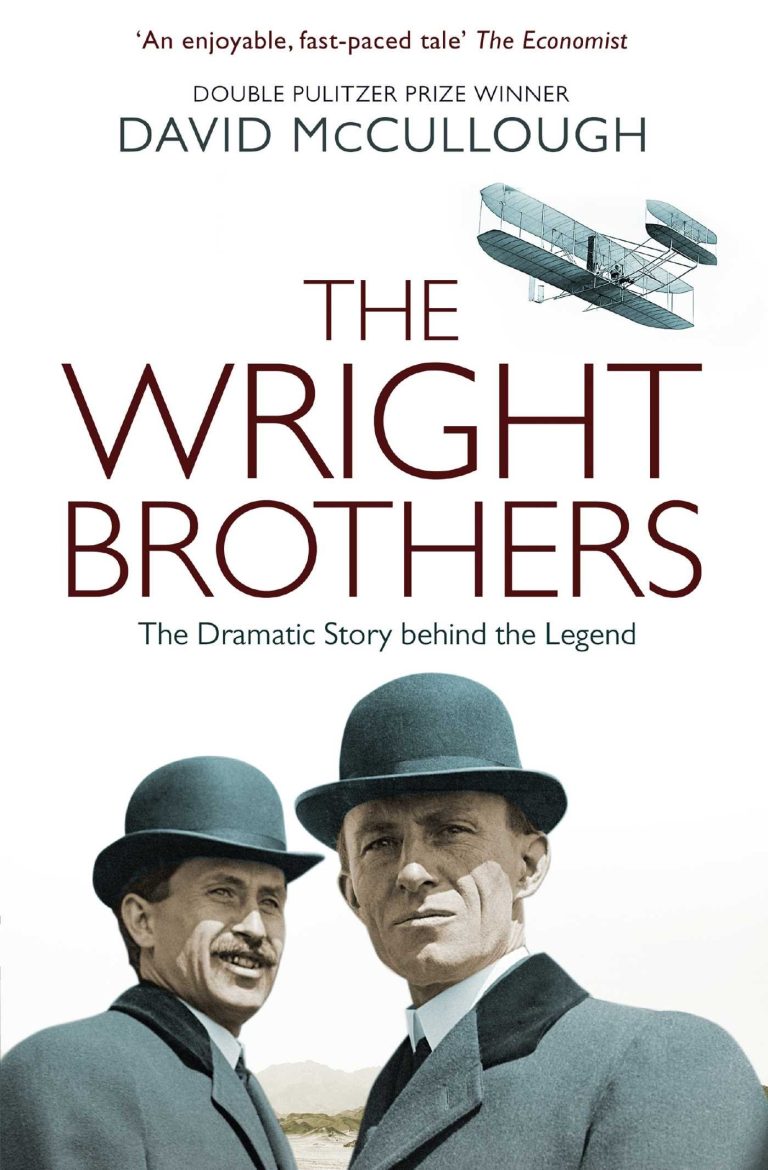
David McCullough’s “The Wright Brothers” is the type of very solid, very interesting historical read that I very much enjoy. It’s 320 pages long or about 10 hours if you’re listening on 1.0 audiobook speed, so it’s a quick one, not really same-day quick but quick nonetheless. And usual, McCullough delivers with the interesting historical details that are the number one reason that nonfiction history is my preesonal favorite genre.
The book covers pretty much everything about the famous brothers, from their childhood and family dynamics in Dayton (Dad was a bishop, Mom was a tinkerer), the bicycle business that funded their aviation experiments, and then all the nitty-gritty of figuring out flight among a world full of naysayers. (I mean…not that you can blame the naysayers. C’mon, if you were going to say “nay” about something back in those times, a couple of rank amateurs assuring you they could figure out how to fly would be tops on the list of things about which to be generally….nay.)
McCullough does a great job showing how methodical and scientific they were about the whole thing, not just lucky tinkerers. What’s really good about it is McCullough’s storytelling is that he makes you feel like you’re right there next to them, getting frustrated over wind tunnels and propeller designs and the press and the French and — well, there was a lot to be frustrated about.
The writing is classic McCullough – clear, engaging, not one bit over your head or esoteric — man, how I would’ve loved to shoot the breeze with McCullough at a party before he passed away.
Critics generally loved the book (it came out in 2015), and praised how he brought fresh perspective and details to a well-known story. Some aviation historians wished he’d gone deeper into the engineering details, but not me — I prefer history books that stay in right in their pop-history lane without going off the rails.
I learned a lot about the famous bros from this book. I realized how much I didn’t know, of course. Doesn’t everybody always think “Kitty Hawk” immediately, when in fact most of their work was done in Dayton. I was also super interested to read how the French government was by far and away the first body to take them seriously; the French were offering them lucrative contracts and sales agreements before the US government or armed forces would even take a meeting with them. I loved reading about how they loved hanging out in Paris and taking in all that city has to offer. Honestly though — maybe I’m just sentimental or I just needed a hero in these broken times, but I loved reading how both of the brothers were 99.9% great all-around dudes. No egos, no bad behavior, always dignified, always straightforward, honest, honorable guys. (The remaining 0.1% is on Orville for acting like a complete dick and writing off his sister when she finally decided to get married, but I’ll leave the details of that for you to read about).
100% full disclosure here — I’ll read anything McCullough wrote, and I’m in the middle of doing so (I’ve knocked out 1776, this one, and a handful of others, but I’m still looking forward to his works on the Brooklyn Bridge, Harry Truman, and of course John Adams. And “The Wright Brothers” is exactly why — if his name is on it, you know it’s going to be a good read, and it absolutely is!